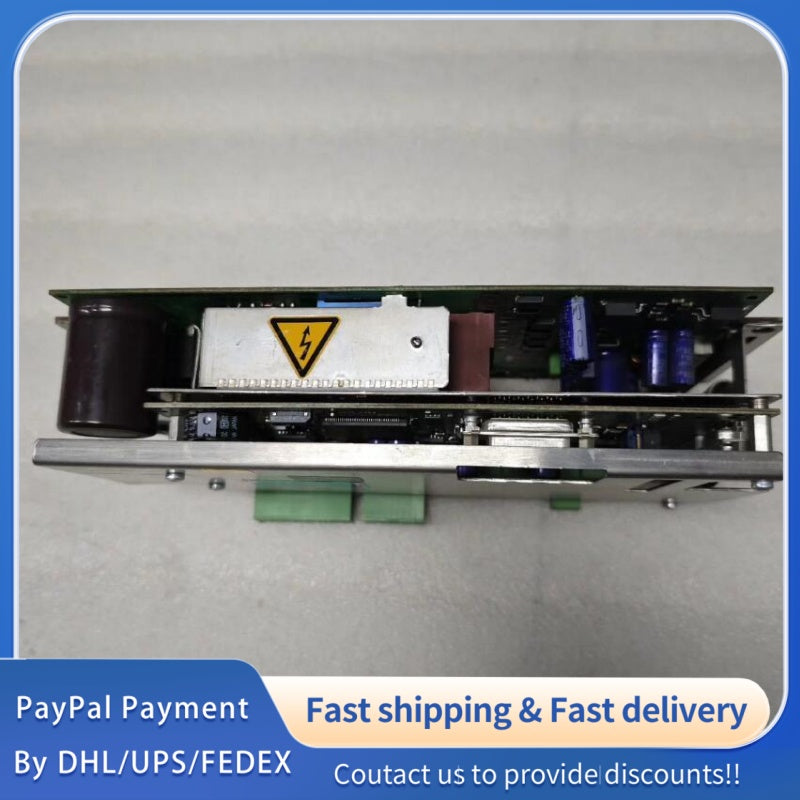
Part Number: VEA20100; Model: VEA20100; Product Name: SCHENCK VEA20100 Industrial Dynamic Balancing Controller; Product Series: SCHENCK VEA Series, Precision Balancing & Vibration Control Controllers
Brand: SCHENCK (Schenck Process GmbH, a global leader in dynamic balancing, vibration monitoring, and process weighing solutions. With over a century of engineering expertise, SCHENCK delivers high-precision control systems tailored for industrial rotating machinery, serving automotive, aerospace, power generation, and heavy machinery industries worldwide. The brand is renowned for its reliable balancing technology and seamless integration with industrial production lines.)
Product Status: Industrial-Grade Original Equipment (Factory Calibrated, 100% Functional, RoHS Compliant); Product Category: Precision Dynamic Balancing Controller, engineered to detect, analyze, and correct unbalance in rotating machinery, ensuring stable operation, reduced vibration, and extended equipment lifespan.
Core Application: Widely applied in dynamic balancing of rotating components such as motor rotors, turbine shafts, pump impellers, crankshafts, and industrial fans. Specifically suitable for automotive engine manufacturing, power plant turbine maintenance, heavy machinery production, and aerospace component processing, where ultra-high balancing precision and real-time vibration monitoring are critical.
Core Features: Advanced vibration signal processing algorithm for high-precision unbalance detection; Intuitive parameter configuration interface for flexible operation; Real-time data display and fault alarm functions; Rich input/output interfaces for seamless connection with sensors and actuators; Rugged housing design resistant to industrial interference; Compliance with international balancing and safety standards; Support for multiple balancing modes (single-plane, dual-plane) to adapt to diverse workpieces.
2. Core Performance Specifications (Ta = 25℃, Unless Otherwise Specified)
2.1 Balancing & Signal Processing Parameters
Balancing Precision: ≤ 0.01 g·mm/kg (Single-Plane Mode), ≤ 0.02 g·mm/kg (Dual-Plane Mode); Rotational Speed Range: 300 rpm ~ 20,000 rpm, Speed Resolution: 1 rpm;
Signal Input: 2×Vibration Sensor Inputs (ICP/IEPE Compatible, 4~20mA / ±5V DC, 24-bit Resolution), 1×Speed Reference Input (Proximity Sensor Interface, NPN/PNP Selectable); Signal Sampling Rate: 10 kHz, Frequency Response Range: 10 Hz ~ 10 kHz;
Balancing Modes: Single-Plane Balancing, Dual-Plane Balancing, Automatic Balancing Correction, Manual Balancing Adjustment; Unbalance Calculation Time: ≤ 500 ms (After Stable Rotation).
2.2 Electrical Performance Parameters
Power Supply Requirements: AC 220V ±10% (50/60Hz), Optional DC 24V ±10% Input; Rated Input Current: 0.5A (AC 220V), 1.2A (DC 24V); Power Consumption: ≤120W (Normal Operation), ≤150W (Peak Load);
Output Interfaces: 4×Digital Outputs (Relay Output, 250V AC / 30V DC, 5A per Channel), 2×Analog Outputs (0~10V DC / 4~20mA, 16-bit Resolution); Insulation Performance: Insulation Resistance ≥100 MΩ (500V DC), Dielectric Strength 2kV AC for 1 Minute (Between Power Circuit and Signal Circuit).
2.3 Communication Parameters
Built-in Communication Ports: RS-485 (Half-Duplex, Optically Isolated, Supporting Modbus RTU Protocol), Ethernet Port (10/100 Mbps, RJ45 Interface, Supporting Modbus TCP/IP Protocol); Data Transmission Rate: 9600~115200 bps (RS-485), 100 Mbps (Ethernet);
Extended Compatibility: Supports Connection with SCHENCK Industrial Software for Data Logging, Report Generation, and Remote Monitoring; Compatible with Third-Party SCADA/MES Systems via Standard Protocols.